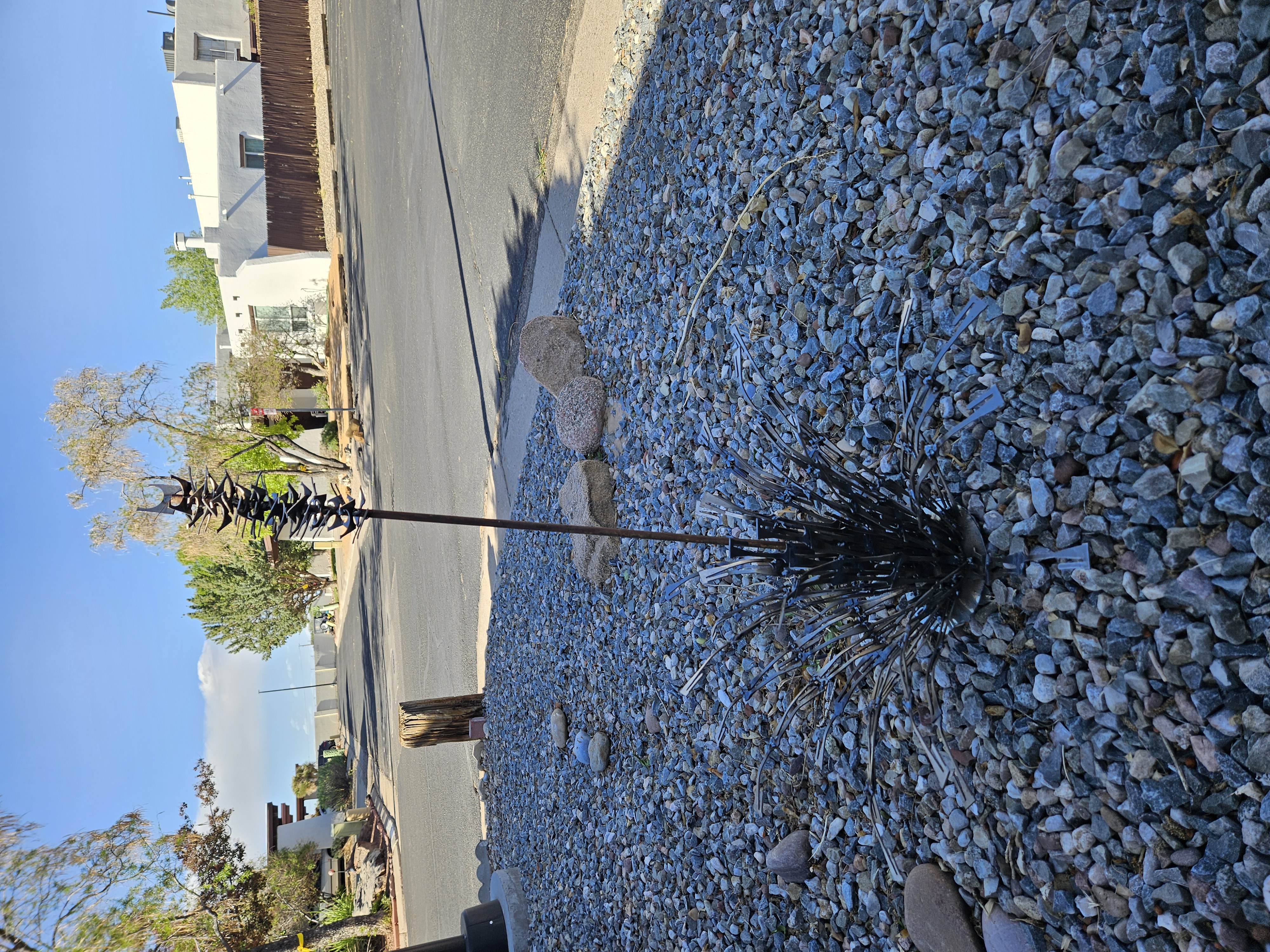
Yucca
Yucca made with golf deviot tool and golf ball marker leftover's
$200.00
In the realm of contemporary art, the fusion of nature and industrial remnants has birthed a captivating creation: the metal yucca plant. Crafted from the remnants of golf divot tool leftovers and unpainted golf ball markers, this striking piece stands as a testament to innovation and sustainability. The yucca plant, known for its hardy nature and striking architectural form, symbolizes resilience and beauty. However, this metal version transcends the mere aesthetic appeal of its natural counterpart. Each component of the sculpture tells its own story—pieces of discarded golf divot tools, traditionally used for repairing greens, and golf ball markers, often overlooked after a day on the course. By repurposing these remnants, the artist breathes new life into objects that would otherwise fade into obscurity. The choice to leave the metal unpainted adds another layer of depth to the artwork. The raw, unfinished surface showcases the inherent qualities of the materials—the sheen of polished metal contrasts with the rugged texture of cut edges. This duality invites viewers to appreciate the craftsmanship and the environmental message woven into the piece. The process of creation involved careful selection and meticulous assembly. Each golf divot tool and marker was collected, cleaned, and transformed. The artist meticulously contemplated the arrangement of these elements, ensuring that the final piece retains the recognizable silhouette of a yucca plant. The juxtaposition of natural form with industrial materials evokes a sense of harmony between the organic and the manufactured. In addition to its visual appeal, this metal yucca plant raises important questions about waste and consumerism. In a world where mass production leads to mountains of refuse, the transformation of these golf items into art promotes a message of sustainability and creativity. It encourages viewers to reconsider their relationship with everyday objects and the potential they hold for reinvention. The finished sculpture embodies a unique aesthetic that resonates with outdoor enthusiasts and art lovers alike. It serves as an excellent conversation starter in homes, galleries, or even outdoor spaces, inviting individuals to reflect on the beauty that can emerge from the discarded. Beyond its environmental commentary, the metal yucca plant also symbolizes growth and transformation. Just as the yucca endures in arid landscapes, this artwork thrives in an ecological narrative, reminding us that from remnants and refuse can spring forth something entirely new and captivating. In sum, this metal yucca plant, forged from the scrap of golf divot tools and unpainted markers, not only highlights the potential of recycled materials but also embodies a profound appreciation for artistry and the delicate balance between nature and human intervention. It stands as a remarkable piece that invites admiration, contemplation, and, ultimately, a greater awareness of the materials we choose to consume and discard.
The concept of creating art from unexpected materials can often lead to innovative and striking results. One such intriguing project is the crafting of a metal yuca from the remnants of golf deviot tools, and incorporating the leftover golf ball markers as decorative elements. This unique combination of materials not only champions the idea of sustainability in art, but also evokes a sense of creativity that transforms the ordinary into the extraordinary. To begin with, yuca, or cassava, is a root known for its edible properties and its cultural significance in various cuisines ac
In the realm of artistic expression, recycling and repurposing materials has taken on a new significance, particularly within the niche of garden art and décor. A prime example of this is the creation of a striking metal yucca plant sculpted from golf deviot tool leftovers and golf ball marker remnants. This innovative piece stands not only as a testament to creativity and craftsmanship but also as an emblem of sustainability. At first glance, the metal yucca represents more than just an ordinary sculpture; it embodies the marriage of sport, art, and nature. The yucca plant, known for its stark beauty and resilience, often features spiky leaves that thrive in arid conditions. The challenge was to capture this unique texture and form using materials that would otherwise be discarded. The sculpting process begins with collecting the leftover pieces from golf deviot tools—an essential accessory for golfers that often gets overlooked. These tools, designed to prepare and mark putting greens, come with a variety of metal components that can be shaped and manipulated. Instead of being relegated to a landfill, these remnants are transformed into the sharp, pointed leaves of the yucca, giving the sculpture a lifelike and edgy appearance. Similarly, the golf ball markers, typically small and circular, add another dimension to the piece. Once a mere accessory for golfers to mark their ball on the green, these markers can be strategically positioned within the sculpture. They mimic the blossoms that sometimes accompany the yucca plant, introducing an intriguing visual contrast to the sharp metallic leaves. The decision to leave the sculpture unpainted further enhances its aesthetic appeal. The raw, unrefined surface of the metal allows viewers to appreciate the true character of the materials used, celebrating their imperfections and history. This choice creates a rustic charm; it invites observers to connect with the process of creation and to ponder the journey of the materials from the golf course to an artistic centerpiece. This metal yucca is not merely an object but a conversation starter in any garden or indoor space. It encourages discussions around recycling, sustainability, and the innovative uses of everyday items. By showcasing how discarded objects can be transformed into art, it inspires others to think creatively about waste and what new life can be breathed into old materials. As the sun catches the edges of the metal leaves, the sculpture casts intriguing shadows on the ground, playing with light and adding an animated presence to its surroundings. Whether placed among a bed of natural plants or used as a standalone feature, the metal yucca serves as a bold reminder of nature’s beauty intertwined with human creativity. The careful arrangement of each component, along with the thoughtful design, creates an illusion of movement—as if the sculpture itself is caught in a gentle breeze. In summary, the metal yucca crafted from golf deviot tool leftovers and golf ball marker remnants stands as a remarkable fusion of art and practical sustainability. It showcases the potential within discarded objects and redefines their worth in a world that often overlooks them. Such creations encourage us not only to appreciate art in its many forms but also to engage in conversations about environmental responsibility and innovative thinking. This sculpture isn’t just a piece of décor; it’s an invitation to reimagine the future of art and sustainability, one recycled piece at a time.
By recreating its form using metal, artisans can explore the juxtaposition of natural and industrial elements. The metal yuca can serve various purposes, perhaps as a garden ornament, a stylish centerpiece, or even a conversation starter in an art installation. The process itself is rather fascinating. Artists begin by collecting the discarded metal parts of golf deviot tools—these tools, typically used by golfers to mark their place on the green, often become obsolete or damaged and are cast aside. Instead of letting these materials go to waste, artists melt down the scrap metal, reshaping it into stylized forms that resemble the yuca root Once the metal has been molded into an intricate representation of yuca, the next step involves the flower-like embellishment, created from leftover golf ball markers. These markers, often bright and colorful, add an unexpected vibrancy to the metal artwork. Each golf ball marker has its own unique design, which, when fashioned into flowers, can symbolize individuality amidst a recycled collective. Artists can affix these flowers atop the yuca or spread them around the base, enhancing the visual appeal of the piece. Not only does this process display artistic skill and innovation, but it also tells a story of resourcefulness. By employing materials that might otherwise contribute to environmental waste, artists forge a new narrative around sustainability. This project serves as a reminder of the beauty that can emerge when one looks beyond the conventional uses of objects and instead, finds new life in what is discarded. Additionally, this art piece can engage discussions surrounding consumerism and waste. In a society rife with mass production and disposable items, creating art from refuse invites viewers to reconsider their own consumption habits and the life cycle of everyday objects. It prompts a deeper reflection on how we can repurpose materials to create something meaningful and beautiful. The final metal yuca, adorned with its vibrant floral accents made from golf ball markers, becomes more than just an art piece; it transforms into a symbol of creativity, sustainability, and thoughtful consumption. Such artworks encourage us to appreciate the potential in what is often overlooked and inspire an appreciation for the intricate connection between nature and industry. Through this exploration of metal yuca and golf tool remnants, artists play a crucial role in promoting an eco-friendly mindset while enriching the artistic landscape with innovative and thought-provoking creations. This project not only showcases the boundless possibilities of art but also illustrates the potential for everyday items to contribute to the larger narrative of sustainability and environmental consciousness.
In the realm of sustainable art and innovative recycling, a fascinating creation emerges: the metal yuca, crafted from the leftovers of golf deviation tools. This remarkable piece not only embodies the spirit of repurposing but also tells a story of transformation and creativity. Let's delve into the intricate details of this unique artwork and explore the process behind it. At first glance, the metal yuca resembles an intricate sculpture, meticulously designed to mimic the natural flow and form of the actual yuca plant. The choice of materials is intriguing—using remnants of golf deviation tools not only highlights the potential of repurposing scraps but also showcases an unexpected intersection between sports equipment and natural art. Golf deviation tools are typically used to help players adjust their alignment and swing, but once they've outlived their purpose, the metallic parts can easily be discarded. However, an artist with vision sees not waste, but potential. By selecting these tools as the foundation, the artist can invoke a dialogue about sustainability, creativity, and the beauty of second chances. The brilliance of this piece lies in its craftsmanship. Each component of the yuca is thoughtfully placed to create an organic form, echoing the graceful curves and lines of the plant. The metallic finish—gleaming in the light—adds a contemporary touch, contrasting beautifully with the natural aesthetic that the yuca embodies. In this way, the artwork not only celebrates the artistry of nature but also the technical precision inherent in golf equipment. To further enhance the sculpture, remnants from golf ball markers serve as unpainted flowers that adorn the yuca. These markers, often overlooked or discarded after a game, find new life in this artistic endeavor. Their raw, unpolished appearance adds a layer of authenticity, showcasing the charm of imperfection and the beauty in the unrefined. The flowers serve as a reminder of the cyclical nature of materials, as they, too, are repurposed and transformed into something entirely new and beautiful. This metal yuca stands as a testament to the potential that lies in creative recycling. It encourages us to reconsider what we perceive as waste and urges us to look beyond conventional purposes. In doing so, it prompts a broader conversation about sustainability in the art world and the importance of embracing materials and resources that would otherwise contribute to environmental degradation. Furthermore, this artwork prompts reflection on the intersection of hobbies, passion, and environmental consciousness. Golf, as a sport, plays a significant role in many individuals' lives, and by integrating its tools into art, the metal yuca bridges the gap between leisure activities and art. It invites golfers and non-golfers alike to appreciate the hidden beauty within their hobby and consider the environmental impact of these passions. As we admire this metal yuca, we are reminded that art can serve as a powerful platform for social commentary, urging us to think critically about our consumption and waste. It challenges the notion of the traditional art object, moving us towards a more innovative and environmentally aware ethos in the creation of artistic expressions. In conclusion, the metal yuca, constructed from golf deviation tool leftovers and adorned with unpainted flowers made from golf ball marker remnants, transcends mere decoration. It is a compelling narrative of sustainability, creativity, and transformation. This inspiring artwork not only captivates with its aesthetic appeal but also serves as a potent reminder that even our discarded materials can blossom into something meaningful and beautiful. By embracing upcycled artistry, we can celebrate the past while paving the way for a greener and more sustainable future.
Discover our unique collection of recycled metal products sourced from manufacturing leftovers. Each item is crafted with care, ensuring sustainability while providing high-quality materials for your projects. Perfect for artists, DIY enthusiasts, and anyone looking to reduce waste. Shop now and contribute to a greener planet with our eco-friendly offerings. Explore the endless possibilities with our recycled machine shop drops!
Pickup or will deliver to the Albuquerque New Mexico area