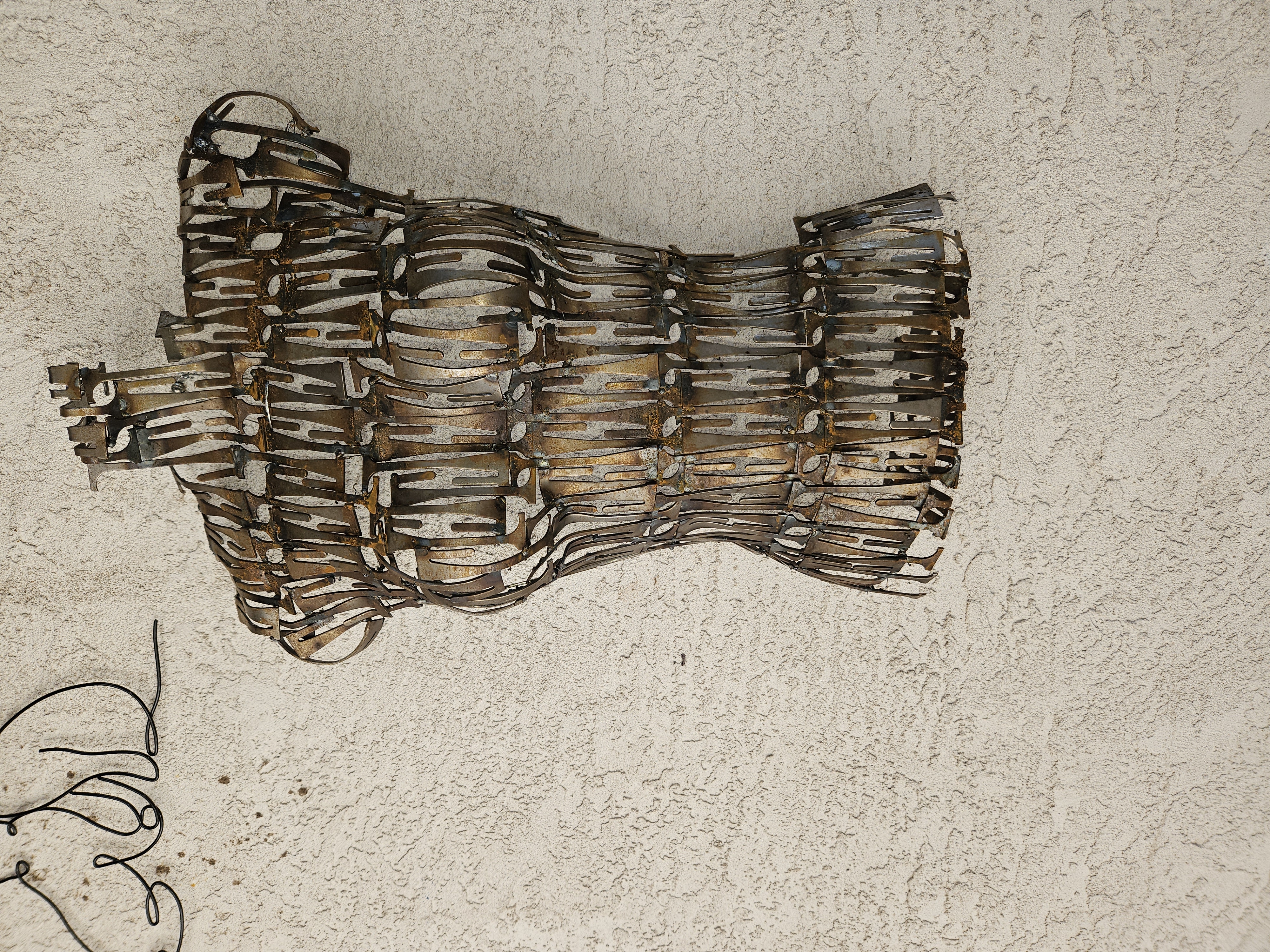
Deviot Torso
Recycled golf deviot tool drops. The leftovers from stamping out the deviot tool.
$300.00
In the world of golf, the pursuit of excellence is often accompanied by innovation, particularly in the development of tools and equipment that enhance the game. One fascinating intersection of craftsmanship and sustainability has emerged through the ingenious repurposing of leftover materials from the stamping process of golf divot tools. These tools, essential for maintaining these prestine fareway. A torso crafted from the remnants of metal sheeting once intended for divot repair tools. Each piece, once considered a mere byproduct of manufacturing, gains new life and purpose in this creative endeavor. The process starts with the careful selection of these discarded materials, examining their unique shapes and textures, which offer a narrative of their previous existence. The artisan, with a keen eye for detail and form, begins to piece together the torso, reminiscent of the elegance of human anatomy yet infused with the ruggedness of industrial origins. The construction of the torso involves meticulous techniques akin to assembling a puzzle. Each metal fragment, clamped and welded, is positioned with intentionality, ensuring that the final sculpture holds both structural integrity and artistic flair. The stark contrast between the polished surfaces of a traditional sculpture and the raw, unfinished textures of the divot tool remnants creates a compelling dialogue about utility, beauty, and the stories embedded within materials. As the torso comes to life, the artist might play with scale, form, and movement. The ability to twist and bend the metal enhances the dynamic nature of the piece, capturing the essence of a human figure in motion. The torso could embody strength and resilience, symbolizing not only the physical prowess of golfers but also the enduring spirit of innovation in craftsmanship. Color, too, plays a significant role in this artistic transformation. While some creators may choose to maintain the original metallic sheen, others might introduce patinas or vibrant powders, breathing new colors into the rigid surfaces. These vibrancies invite viewers to question the origins of the materials, drawing attention to their industrial past while celebrating their rebirth as a work of art. Beyond aesthetics, the creation of a torso from golf divot tool remnants serves as an important commentary on sustainability and the circular economy. In an era where waste reduction becomes increasingly vital, this practice showcases how industries can rethink their processes to minimize waste. Instead of a linear approach to production, which leads to discarded materials and environmental impact, this practice embraces a cyclical methodology—whereby every leftover can be an opportunity for artistic expression. The final piece, a torso born from the essence of golf, becomes a symbol of perseverance and creativity in the face of wastefulness. It prompts reflection about our consumption habits and the potential for beauty in the overlooked. As golf continues to evolve, so does the imagination of those who contribute to its culture, pushing boundaries in the name of art, sustainability, and the human experience. In exhibitions and galleries, these unique sculptures capture not just the eye, but the imagination of all who encounter them. Each torso carries a story of transformation—of metal once destined to be discarded, now standing tall as a testament to human ingenuity. They invite viewers to appreciate not just the beauty of the artwork itself, but also the resources and ideas that have birthed it. As conversations surrounding art, sustainability, and industry intertwine, the repurposed torso emerges as a powerful reminder of the potential hidden within what we often consider waste.
In the world of golf, precision and innovation collide to create tools that enhance performance on the green. Every driver, putter, and iron plays a pivotal role in the game, yet beyond their sleek designs and advanced technology lies an often-overlooked consequence of their production: waste. The manufacturing of golf clubs requires numerous processes, including stamping. This process generates leftover materials, which, if not managed sustainably, can contribute significantly to environmental waste. However, innovative designers are turning this challenge into an opportunity, breathing new life into these remnants of metal through creative reuse and artistic expression. One fascinating approach to this recycling challenge is the creation of a torso sculpture, crafted entirely from the leftover materials obtained during the stamping of golf club tools. This unique piece not only showcases the artistry that can arise from industry by-products but also serves as a poignant commentary on sustainability and creativity. **Craftsmanship and Creativity** To construct this torso, skilled artisans begin by collecting the remnants generated from the various manufacturing processes of golf tools. These leftovers include the off-cuts, scrap metal, and discards that would typically be relegated to landfill. Instead, the artisans meticulously sort through this raw material, searching for pieces that possess not only structural integrity but also aesthetic qualities. Once the materials are selected, the crafting process begins. The designer envisions the torso as a celebration of the human form, symbolizing the connection between sport, nature, and art. The chosen scrap metal pieces are cleaned, treated, and prepared for assembly. Some sections may be hammered into curved shapes to mimic the contours of muscles, while others may be layered to create depth and texture. The welding process follows, as these disparate elements are fused together, creating a cohesive structure that embodies both strength and grace. **A Symbol of Sustainability** This torso represents much more than an artistic endeavor; it stands as a monument to sustainable practices within the golfing industry. By transforming waste into art, the creators challenge the notion that manufacturing inevitably leads to excess and inspire others to rethink resource management. The torso becomes a symbol of healing and regeneration, reminding observers of the importance of reusing materials and reducing our ecological footprint. Furthermore, this project fosters wider conversations about how industries can evolve in response to environmental challenges. It prompts golf manufacturers and designers to consider their processes, encouraging a shift towards zero-waste initiatives and responsible practices. When the golf community recognizes the value of repurposing materials, it can inspire wider environmental stewardship. **Integrating Art and Sport** The torso sculpture also serves as a bridge between the realms of art and sport. At tournaments and golf exhibitions, this piece captures the attention of players, enthusiasts, and spectators alike, sparking discussions about the intersection of craftsmanship and athleticism. It blends the technical prowess of golf manufacturing with the creative expression found in sculpting, enhancing the appreciation for both disciplines. Moreover, the torso can be a focal point in galleries or community spaces, promoting awareness of recycling and sustainability beyond the golf community. Its presence invites viewers to contemplate their own habits regarding consumption, waste, and environmental responsibility. **Conclusion** In an era where environmental consciousness is paramount, the torso made from the leftovers of golf tool manufacturing transforms waste into a statement of purpose and innovation. It successfully intertwines the themes of sustainability, creativity, and the sporting spirit. As it stands proudly in exhibitions or tournaments, this torso serves as both an art piece and a testament to what the world can achieve when we look beyond traditional boundaries and embrace the potential of resourcefulness. Through such creative endeavors, we can inspire not just golfers, but all individuals to imagine a more sustainable future, one where even the pieces we discard can become beautiful additions to our collective narrative.
Pickup will deliver to the Albuquerque New Mexico area.